In an effort to re-assure the public, Janet Napolitano appeared afterwards on the Sunday talk shows to let us know that this rig was just one of 30,000 wells in the Gulf of Mexico, alone. I didn't find this especially comforting when you consider these wells presumably have the same "blowout preventer" as the one that failed.

Oil on the waters
Apparently, no one in the legislature bothered to check with their own agency responsible for overseeing drilling operations, the Materials Management Service, to see whether the industry's claims were true. According to the MMS, there have been 1,443 serious drilling accidents in offshore operations just from 2001 to 2007. These failures caused 356 spills, 302 injuries and 41 deaths.
At any rate, there is plenty of other evidence to remind us of how risky oil production can be. The global petroleum industry is a complex system of oil wells, refineries, pipelines, ports and oil tankers all of which carry a risk of accidental release. I thought it might be interesting to look back at some previous spills to illustrate this point.

In 1967 the tanker Torrey Canyon ran aground off the Cornwall coast of England, contaminating large stretches of the English and French coasts. Although it was an American ship, it was being leased to British Petroleum at the time.

The Santa Barbara oil spill occurred in 1969 when an oil platform blew out and released 100,000 barrels of oil onto the California coastline. The Santa Barbara beaches were still contaminated when I was there in 1981.
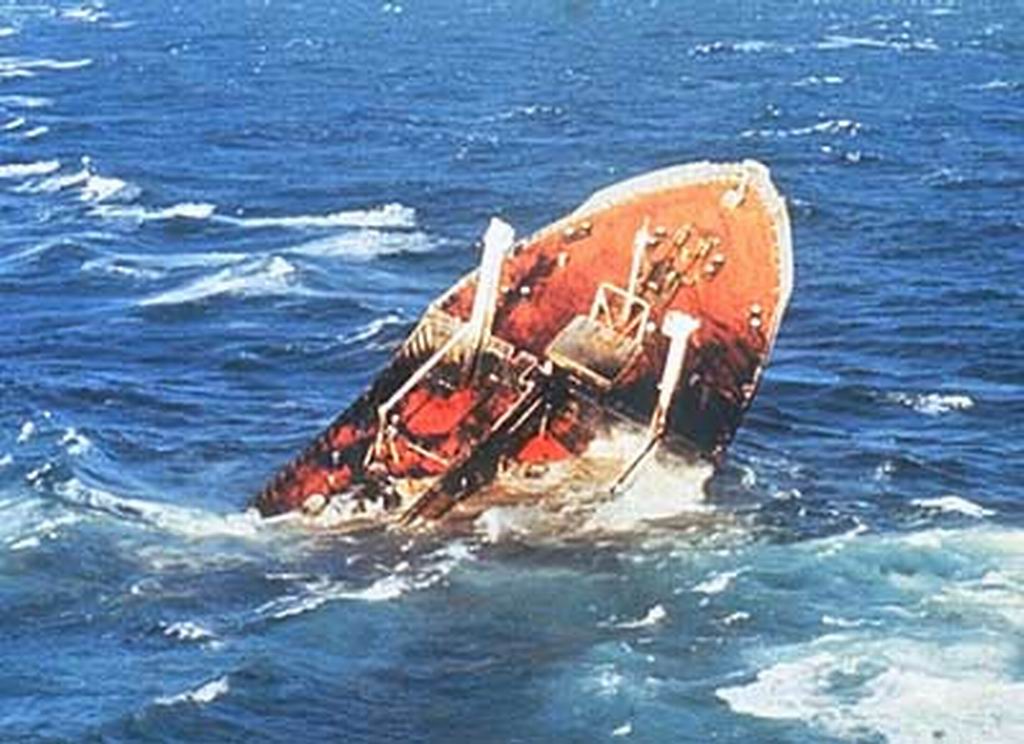
The Argo Merchant was a Liberian-registered oil tanker that ran aground southeast of Nantucket Island, Massachusetts in 1976. Rough seas made it impossible to contain the oil but favorable winds pushed it all out to sea and away from the coastline.

In 1978 the Amoco Cadiz ran aground off the coast of Brittany, resulting in the largest oil spill ever up until that time (1.6 million barrels). The extensive beaches and marshlands along the coast were severely polluted and resulted in massive damage to wildlife.

In 1979, two giant oil tankers, the Atlantic Empress and the Aegean Captain, collided near Trinidad in the Carribean. Huge amounts of oil were released but most oil never made it onshore.

Another wellhead blowout occured off the coast of Mexico in 1979 when the Ixtoc I exploratory well suffered the failure of its blowout preventer. It took over 9 months to cap the well and over 3 million barrels were released, some of which made it to the Texas coastline.

In 1987, the U.S. began re-flagging Kuwaiti oil tankers in an effort to protect them from Iranian attacks. Unfortunately, the heavily-laden tanker Bridgeton struck an Iranian mine and nearly sank. Somehow, it managed to make it to port without losing much of its cargo.

Many Americans remember the Exxon Valdez disaster in 1989 which spilled 11 million gallons of oil into Alaska's Prince William Sound. An inexperienced pilot steered the ship onto a reef where the vessel broke up.

Despite an extensive cleanup, only about 10% of the oil was actually recovered, most ending up along hundreds of miles of rocky Alaskan coastline. Like BP, Exxon was criticized for its slow response to the accident.

Despite BPs claim that blowouts are unlikely, there have been 39 of them between 1992 and 2006.

Another ship collision in 1994 leaked crude oil into the Arabian Sea after a Panamanian-flagged ship collided with the UAE tanker Baynunah off the UAE port of Fujairah.

The Ecuadorean-registered tanker Jessica ran aground in 2001 near the Galapagos Islands and began leaking oil. The spill affected large populations of birds, gulls and sea lions.

Over 1000 beaches in Spain and France were contaminated when the oil tanker Prestige sank off the Spanish coast in 2002.

The Jiyeh Power Station oil spill was an environmental disaster caused by the Israeli Air force in 2006. During their invasion of Lebanon they bombed oil storage tanks at the thermal power station in Jiyeh, Lebanon, just south of Beirut.

Satellite views showed the oil slick flowing down and covering a third of the Lebanese coastline. Here, the black line along the shoreline is evidence of the oil residue.

The COSCO Busan oil spill occurred in 2007 when an oil tanker collided with one of the supports of the Oakland Bay Bridge in dense fog. Because of the tidal mechanics of the bay, the oil spread quickly and much was never recovered.

Over 50 beaches were closed and wildlife was affected over the entire Bay area. The fishing industry still has not completely recovered from the contamination.
 \
\Another oil spill occurred in 2008 when a tanker and a barge collided releasing over 400,000 gallons of oil into the Mississippi River.

Another major spill occurred along the Australian coast in 2009 when a tanker leaked large quantities of oil after the ship was caught in Cyclone Hamish.


